
Your trees can’t tell you when they’re struggling, but they do send signals. A healthy, vibrant tree can be the centerpiece of your property, but a tree under stress can quickly become a liability. The key is to spot the subtle signs of decline before they turn into a costly and dangerous problem.
As your trusted arborist advisors, we want to teach you how to read the language of your trees. By learning to spot these five common signs of stress, you can become the first line of defense for your property’s most valuable living assets.
Sign 1: Fungi or Mushrooms Growing on the Trunk or Roots
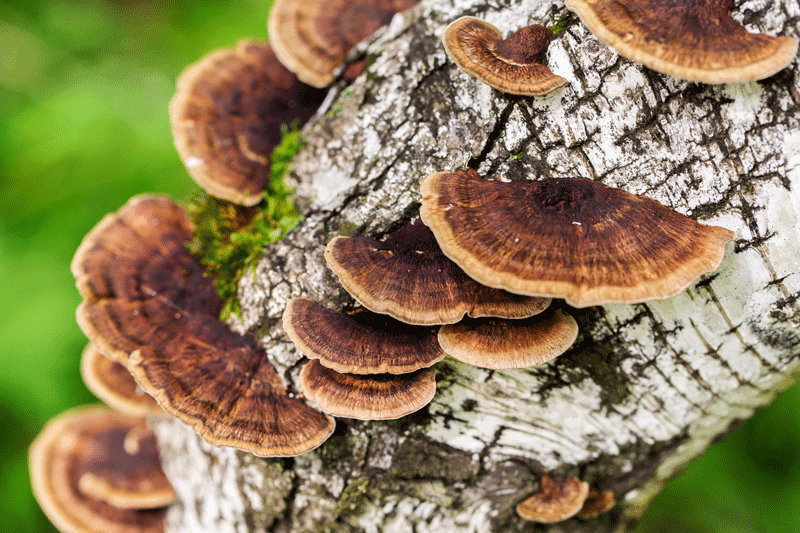
What you see on the surface often tells a story about what’s happening underneath. While some fungi are harmless, the appearance of mushrooms or other fungal bodies on the trunk, at the base of the tree, or on major roots is a significant red flag.
- What it Means: Fungi are nature’s decomposers. Their presence often indicates that there is dead or decaying wood within the tree. This could be a sign of internal rot in the trunk or, more commonly, root rot, which compromises the tree’s stability and its ability to absorb nutrients.
- What to Do: Do not ignore it. Take a photo of the fungi and call a certified arborist for a professional health assessment. An expert can help determine the extent of the decay and whether the tree’s structural integrity is at risk.
Sign 2: A Thinning Canopy or Leaves That Drop Too Early
Your tree’s canopy is its engine. A full, lush canopy is a sign of a healthy, well-fed tree. If you notice a change, pay attention.
- What it Means: If you can see more sky through the branches than you could in previous years, or if the leaves seem smaller or less vibrant, the tree is likely under stress. This can be caused by a wide range of issues, including soil compaction, nutrient deficiency, root damage, or disease. Similarly, if your tree is dropping its leaves well before its neighbors in the fall, it’s a sign that it’s trying to conserve energy.
- What to Do: This is a general symptom, so diagnosis is key. Consider if there have been any recent changes to the area around the tree, such as construction or new landscaping. A soil test or a consultation with an arborist can help identify the root cause.
Sign 3: Deadwood or Large, Leafless Branches
It’s normal for a tree to have a few small, dead twigs. It’s not normal for it to have large, leafless branches in its upper canopy, especially during the growing season. Understanding seasons and when to prune will help protect your trees and landscape.
- What it Means: These branches, often called “deadwood,” are a clear sign that a part of the tree is no longer receiving the water and nutrients it needs to survive. They are also a major safety hazard. Dead branches are brittle and are often the first to break and fall during a storm.
- What to Do: Deadwood should be professionally removed. A certified arborist can safely prune these branches without damaging the healthy parts of the tree, which not only improves safety but also enhances the tree’s appearance and allows it to redirect resources to healthy growth.
Sign 4: Cracks, Splits, or Peeling Bark
A tree’s bark is its armor. It protects the vital, living tissues underneath from pests, disease, and the elements.
- What it Means: Deep vertical cracks or splits can be a sign of structural weakness, often caused by storm damage or improper healing from a past injury. Large areas of peeling or flaking bark can indicate that the tissue underneath has died, often due to a fungal canker, insect attack, or sunscald.
- What to Do: Not all bark issues are a death sentence, but they should be inspected. If you see deep splits or large patches of missing bark, it’s time to call for an expert opinion to assess the structural risk.

Hidden decay like this can compromise your tree’s stability—routine checkups help catch it early.
Sign 5: Heaving Soil or Visible Roots Where There Were None Before
This is one of the most serious signs of stress and potential failure.
- What it Means: If the ground on one side of the tree appears to be lifting or mounding, it can be a sign that the tree is beginning to uproot. This indicates a failure of the root system and a high risk of the tree falling. Similarly, if you suddenly see major roots becoming exposed that were previously underground, it could be a sign of severe soil erosion and a weakening anchor.
- What to Do: This is an urgent situation. If you see heaving soil or a sudden, significant lean, create a safe zone around the tree and call a professional arborist for an emergency assessment immediately.
Your Role as a Proactive Homeowner
Noticing these signs doesn’t make you a tree expert, but it does make you an informed and proactive homeowner. You are the one who knows your property best. By spotting these changes early, you can move from a position of worry to one of empowered action.
If you see any of these signs, the next step is simple: start a conversation.
Learn more about how these signs fit into a yearly plan in our Southwest Florida Homeowner’s Guide to Annual Tree Care.
Worried about a tree on your property?