Stop Believing These 5 Tree Pruning Myths
The internet is filled with well-intentioned but often incorrect advice about tree care. Following these old wives’ tales can do more harm than good, leading to weak, unhealthy, and even dangerous trees. As part of our mission to educate homeowners, we’re debunking five of the most common and damaging tree pruning myths we encounter in Southwest Florida.
Myth #1: “You should apply a wound sealer or paint after pruning.”
The Truth: This is perhaps the most persistent myth. For decades, it was common practice to paint cuts with a tar-based sealer. However, modern arboricultural research has shown that these sealers actually inhibit a tree’s natural healing process. Trees have their own highly effective way of closing off wounds, a process called compartmentalization. Applying a sealer can trap moisture and decay-causing fungi against the wood, preventing the tree from healing and often making the problem worse.
The Takeaway: A proper pruning cut, is all the tree needs to heal itself. Save your money and skip the sealer.
Myth #2: “Topping a tree is a good way to control its size.”
The Truth: Topping, or indiscriminately cutting the top of a tree off, is one of the most harmful things you can do to it. It creates large, gaping wounds that the tree cannot properly seal, leading to decay. It also triggers a survival response in the tree, causing it to send up a profusion of weak, fast-growing shoots (suckers) just below the cut. These shoots are poorly attached and are far more likely to break off in a storm than the original branches.
The Takeaway: A topped tree is an ugly, hazardous, and high-maintenance tree. A professional arborist will use proper reduction cuts to control size without destroying the tree’s structure.
Myth #3: “Anyone with a chainsaw can be a tree pruner.”
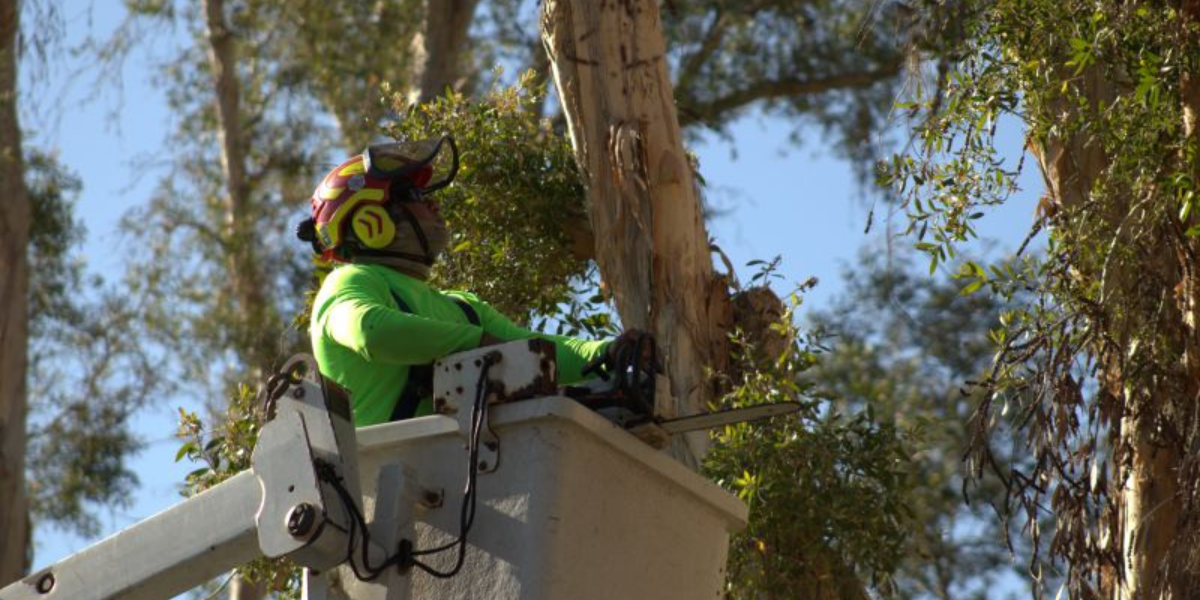
The Truth: This is a dangerous and costly assumption. Operating a chainsaw is only a tiny fraction of the job. A professional arborist is trained in tree biology, physics (to understand how branches will fall), safety protocols, and the precise techniques of pruning. Hiring an uninsured and untrained individual puts your property, your safety, and their safety at risk. As we cover in our guide on 10 Questions to Ask a Tree Service, proper certification and insurance are non-negotiable.
The Takeaway: Pruning is a science. Hire a professional who understands it, not just someone who knows how to start a saw.
Myth #4: “A tree that is losing leaves or has dead branches is dying and should be removed.”
The Truth: Not necessarily. Trees, like all living things, can experience stress. Leaf drop or branch dieback can be symptoms of a treatable problem, such as a pest infestation, a soil nutrient deficiency, or drought stress. Removing a mature tree should always be the last resort. A certified arborist can diagnose the underlying cause of the symptoms and, in many cases, recommend a treatment plan to restore the tree to health.
The Takeaway: Don’t play doctor with your trees. Get a professional Tree Health Assessment before you make a decision you can’t undo.
Myth #5: “You can prune trees at any time of year.”
The Truth: While removing dead or hazardous branches can be done anytime, the timing of major structural pruning does matter. In Southwest Florida, the best time for significant pruning of most hardwoods is during the dormant season (late fall to early spring). Pruning at the wrong time, such as during the peak of the summer heat or when certain pests are most active, can put unnecessary stress on the tree.
The Takeaway: Timing is crucial for maximizing the benefits of pruning and minimizing stress. Consult an arborist to determine the optimal schedule for your specific trees.
Tired of the myths? Get a straightforward, scientific assessment of your trees from the experts at Joshua Tree Inc.
Dive Deeper into tree care with our Southwest Florida Annual Tree Care Guide.