
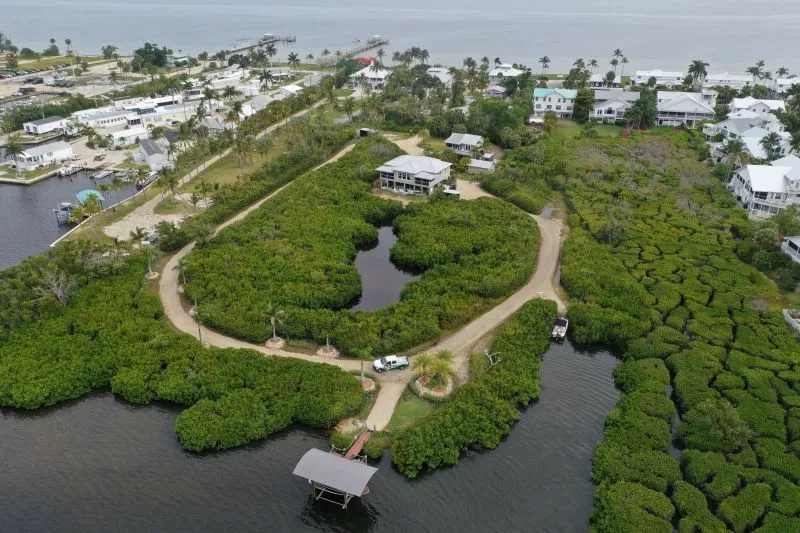
Why Are Mangroves Protected in Florida?
Florida’s mangrove ecosystems provide significant environmental and economic benefits that directly impact coastal communities. The state’s estimated 600,000 acres of mangrove forests are a distinct saltwater woodland that thrives in tidal estuaries.
Mangroves help reduce shoreline erosion by stabilizing coastal soils with their complex root systems.
- Improve water quality by filtering pollutants, trapping sediments, and absorbing nutrients.
- Provide critical habitat for fish, birds, and other wildlife. Branches serve as rookeries for coastal birds like brown pelicans, while roots act as nursery habitats for juvenile fish.
- Protect waterfront properties from storm surge and wave action. A recent study indicated that mangroves in Southwest and Southeast Florida averted $1.5 billion in storm damage during Hurricane Irma.
- Support local fisheries and recreational activities, which would decline drastically without healthy mangrove ecosystems.
Because of these vital benefits, Florida regulates the trimming, alteration, and removal of all three native mangrove species (red, black, and white) through the Florida Department of Environmental Protection (FDEP) and delegated local governments.
In most situations, permits are required before work can occur within protected mangrove areas. Property owners and contractors are legally expected to understand these requirements before initiating any land-clearing or vegetation management activities.
What Happens After Unauthorized Mangrove Removal?
Clearing mangrove trees without permission is a serious offense in Florida. When unauthorized impacts to protected mangroves are discovered, regulatory agencies immediately begin evaluating the extent of the environmental damage.
The Investigation Process
The initial process typically involves:
- Site Inspections: Environmental specialists and regulatory personnel from the FDEP or local agencies conduct field inspections to determine the scope of the violation.
- Damage Assessment: Inspectors evaluate the number of mangroves affected, the size and age of the impacted vegetation, the total area disturbed, and potential impacts to surrounding ecosystems.
- Regulatory Review: Multiple agencies may become involved in reviewing the incident. The objective is to determine appropriate corrective actions, restore environmental function, and ensure future compliance.
Penalties and Fines
- The financial and legal consequences of illegal mangrove removal are severe. Under Florida Statutes (Chapter 403.9332), penalties can include:
- Fines up to $100 for each mangrove illegally trimmed.
- Fines up to $250 for each mangrove illegally altered or removed.
- Misdemeanor Charges: In severe cases, clearing mangroves without permission is considered a first-degree misdemeanor, punishable by a maximum fine of $10,000, up to six months in jail, or both.
- Additional Penalties: Local delegated authorities may impose further fines, sometimes reaching up to $7,500 per violation depending on the jurisdiction and the extent of the damage.
The Complex Reality of Mangrove Mitigation and Restoration
Mitigation is one of the most critical, and often most expensive, aspects of resolving unauthorized mangrove impacts. Mitigation is designed to offset environmental losses by restoring, enhancing, or creating habitat that provides similar ecological benefits.
One of the most common misconceptions is that mangrove restoration simply involves planting new trees. In reality, successful restoration requires a highly scientific and comprehensive approach.
A professional restoration plan must consider:
- Hydrology: Mangroves depend on specific tidal and water-flow conditions to survive. If these conditions were altered during the illegal clearing, newly planted mangroves will struggle to establish.
- Soil Conditions: Restoration professionals evaluate soil composition, elevation, drainage characteristics, and environmental suitability before planting occurs.
- Species Selection: Selecting the appropriate species (red, black, or white mangroves) and placing them in the correct tidal zones is essential for long-term success.
- Monitoring and Maintenance: Restoration projects mandated by the state require long-term monitoring (often 3 to 5 years) to evaluate survival rates, growth performance, and ecological recovery.
The ultimate goal mandated by regulatory agencies is not simply replacing vegetation, but restoring the ecological function that was lost.
The Financial Impact of Mangrove Removal Mistakes
Environmental compliance issues create significant financial and operational challenges for property owners and developers. Potential impacts include:
- Project delays while investigations and permitting are resolved.
- Restoration expenses, which can average around $45,000 per hectare in Florida.
- Environmental consulting and legal costs.
- Long-term monitoring obligations.
- Regulatory enforcement actions and fines.
Beyond direct costs, project teams and property owners may also face intense public scrutiny and reputational damage when sensitive coastal resources are destroyed. Proper planning before land-clearing activities can help avoid these challenges altogether. A professional Arborist at Joshua Tree Inc. can explain the Florida mangrove pruning process, safe , legal, and environmentally responsible.
How Property Owners and Developers Can Avoid Problems
The most effective strategy for managing coastal properties is proactive due diligence. Before any vegetation management or land-clearing work occurs near coastal resources, project teams should:
- Verify Permitting Requirements: Understand applicable local, state, and federal regulations. Florida law does allow property owners to trim “riparian mangrove fringes” to improve waterfront views, but only under very specific stipulations and often requiring a permit.
- Conduct Professional Site Assessments: Hire environmental and arboricultural professionals to identify protected vegetation and determine whether permits are required.
- Work With Qualified Professionals: Use State Authorized Professional Mangrove Trimmers (PMTs) and ISA Certified Arborists. Experienced professionals can navigate regulatory requirements, perform the work legally, and significantly reduce your liability risk.
Protecting Florida’s Coastal Future
Mangroves play a vital role in protecting Florida’s coastlines, wildlife habitats, and waterfront communities. When impacts occur, the focus must shift toward understanding the environmental consequences, restoring ecological function, and implementing solutions that support long-term sustainability.
Successful management and restoration require collaboration between property owners, environmental professionals, contractors, and regulatory agencies. Through proper planning, compliance, and stewardship, coastal projects can move forward while preserving the natural resources that make Southwest Florida unique.
Need Guidance on Mangrove Compliance or Restoration?
Joshua Tree Inc. works with property owners, developers, HOAs, and commercial clients throughout Southwest Florida to navigate vegetation management, environmental compliance, and restoration planning.
Our team includes ISA Certified Arborists and experienced professionals who understand the strict legal requirements of working within sensitive coastal environments. We help you protect your shoreline, preserve wildlife habitats, and keep your views clear—all within the bounds of the law.
The Difference That Makes a Difference.